The 12 Grammar Rules to Learn First When Time Is Short

Quick answer: Learn twelve rules and leave the rest of the grammar book for later. They cover the errors that appear most often: verb agreement, articles, past simple, word order, questions, negatives, quantity words and object pronouns. Twenty minutes a day of writing your own sentences makes them automatic.↗ Share on X
If you only have a few weeks and an hour here and there, learn twelve rules and ignore the rest of the grammar book. These twelve cover the mistakes that appear most often in real speech and writing, and they are the ones that make a listener stop and ask you to repeat yourself. Everything else — perfect conditionals, rare tenses, formal sentence patterns — can wait until these are automatic.
Why only twelve rules?
 Pick the Right English Tense for Daily Life Easily →
 English Grammar: 12 Common Mistakes to Fix This Week →
 Simple Guide to English Grammar Rules for Beginners →
Because errors are not spread evenly. A small number of them appear again and again, in every learner, in every language background. Missing articles. Verbs that do not match their subject. The wrong past tense. Those few errors do most of the damage to how clear you sound.
The rest of the grammar book is real, but it earns you much less per hour of study. If your time is short, spend it where the errors actually are.
Level up — free guides in your inbox
What are the twelve rules?
Each one is written with the mistake first, then the fix, so you can recognise your own habit.
| # | Rule | Wrong | Right |
|---|---|---|---|
| 1 | The verb matches the subject | She go to work | She goes to work |
| 2 | Use a, an, the before singular nouns | I have car | I have a car |
| 3 | Finished past uses the past simple | I have gone yesterday | I went yesterday |
| 4 | Keep subject, verb, object in order | Yesterday went I home | Yesterday I went home |
| 5 | Adjective goes before the noun | a house big | a big house |
| 6 | Questions use do, does, did | You like coffee? | Do you like coffee? |
| 7 | After don't, doesn't, didn't use the base verb | He doesn't works | He doesn't work |
| 8 | Much for uncountable, many for countable | many informations | much information |
| 9 | in, on, at for time | in Monday | on Monday |
| 10 | Object pronouns after a verb | I saw she | I saw her |
| 11 | Some verbs take -ing, others take to | I enjoy to read | I enjoy reading |
| 12 | Use more for long adjectives | more cheaper | cheaper |
Read the table out loud once a day for a week. Not to memorise it — just so the right version starts to sound normal to your ear.
Which three should you fix first?
 The 12 English Grammar Mistakes Learners Repeat Most →
 12 English Grammar Mistakes That Give Learners Away →
 The 12 English Grammar Rules That Fix Most Mistakes →
If twelve feels like too many, start with rules 1, 2 and 3. They appear in almost every sentence you will ever say.
Rule 1 — the verb matches the subject. In the present, add -s only for he, she and it. I work, you work, we work, they work, but *he works*. That is the whole rule for regular verbs.
Rule 2 — articles. Use *a* before a consonant sound and *an* before a vowel sound: a job, an hour. Use *the* when the listener already knows which one you mean: "the car outside". Skip the article with uncountable things in general: "I like music", not "I like the music" — unless you mean a particular piece of music.
Rule 3 — past simple for finished time. If you say when it happened, use the past simple. *I finished it yesterday.* Use the present perfect when the time is not stated and the result still matters now: *I have finished it.* Never put a finished time word next to "have": "I have finished it yesterday" is always wrong.
How do you study them in twenty minutes?
A short daily session beats a long weekend session, because grammar becomes automatic through repetition, not through understanding. You probably already understand most of these rules. You just do not use them under pressure.
Here is a session that fits in twenty minutes.
1. Two minutes — read the table out loud. Only the right-hand column.
2. Eight minutes — write five sentences about your own day using one rule on purpose. About your work, your family, your food. Your own life, because those are the sentences you will actually need.
3. Five minutes — say them out loud, slowly, twice. Writing teaches the eye. Speaking teaches the mouth. You need both.
4. Five minutes — reread yesterday's five sentences and correct anything you now see is wrong.
Do that six days a week and leave the seventh alone. Miss a day and just continue; do not try to make up the lost time with a double session.
How do you stop repeating the same mistake?
Keep an error notebook. It is the single habit that separates learners who improve from learners who plateau.
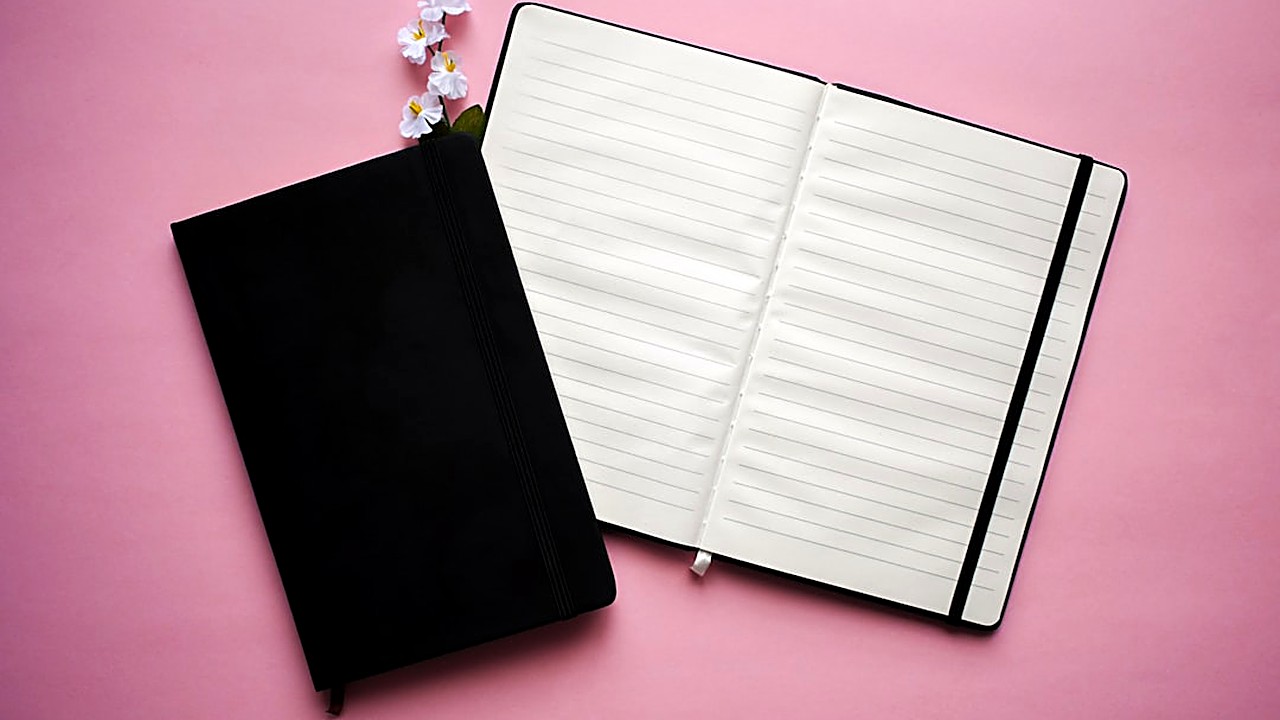
Get any small notebook. Draw a line down the middle. Every time someone corrects you, or you notice your own mistake, write the wrong sentence on the left and the right one on the right. Your own sentences only — not examples from a book.
After two weeks you will see something useful: you do not have fifty problems. You have four or five, repeated. That short list is your actual study plan, and it is more accurate than any course could give you, because it came from your own mouth.
Read the right-hand column out loud every few days. Do not study the left-hand column; you already know that version too well.
What can you safely ignore for now?
While time is short, put these to one side without guilt:
- Rare tenses. The past perfect continuous and its relatives. Native speakers use them far less than textbooks suggest.
- The third conditional. "If I had known, I would have come." Useful one day, not today.
- Formal linking words. Nevertheless, notwithstanding, heretofore. They will not make simple sentences sound better, and they often make them sound stranger.
- Idioms. Fun to collect, but an idiom used slightly wrong confuses people more than a plain sentence used right.
- Large vocabulary lists. Two hundred words you can use beat two thousand you recognise.
Plain, correct sentences sound better than complicated, broken ones. That is true in every language, and it is true in every exam.
What does good practice look like in one week?
Here is a shape that works for a learner with about twenty minutes a day.
| Day | Focus | Output |
|---|---|---|
| Monday | Rule 1, verb agreement | 5 sentences about your job |
| Tuesday | Rule 2, articles | 5 sentences about your house |
| Wednesday | Rule 3, past simple | 5 sentences about last weekend |
| Thursday | Rules 6 and 7, questions and negatives | 5 questions you could ask a stranger |
| Friday | Rules 8 and 9, quantity and time words | 5 sentences about your shopping |
| Saturday | Review the error notebook | Rewrite the 5 worst sentences of the week |
Sixty sentences by Saturday, all about your own life, all checked. That is more useful practice than most people get in a month of watching lessons.
How do you check whether a sentence is right?
Three quick self-checks you can run in a couple of seconds, without any tool:
1. Find the subject, then find the verb. Do they match? He *works*, they *work*.
2. Look at every singular noun. Does it have *a*, *an*, *the*, *my*, *this* or a similar word in front? If not, it is probably missing one.
3. Find the time word. If it names a finished time — yesterday, last year, in 2019 — the verb must be past simple.
Run those three checks on anything you write before you send it. They catch a surprising share of everyday errors.
Your next step: start the notebook tonight
Take any notebook. Write today's date at the top of the first page and draw the line down the middle.
Then write five sentences about what you did today, using the past simple. Read them out loud. Check them against rules 1, 2 and 3 from the table above, and correct what needs correcting.
That is twenty minutes, and the page you just wrote is now the first entry in the only grammar book that is about you.
FAQ
Which grammar rule should I fix first?
Subject and verb agreement, because it appears in nearly every sentence. In the present tense, add -s only for he, she and it: I work, you work, they work, but he works. Once that is automatic, move to articles, then to the past simple.
How long should a daily practice session be?
About twenty minutes, six days a week. Two minutes reading correct examples out loud, eight writing five sentences about your own day, five saying them aloud, and five rereading yesterday's sentences. Short daily repetition beats one long weekend session.
What is an error notebook and why does it help?
A notebook with a line down the middle: your wrong sentence on the left, the corrected version on the right. After two weeks it shows that you repeat four or five errors, not fifty. That short list becomes a study plan built from your own speech.