Less or Fewer? The Counting Test That Fixes It in 5 Seconds

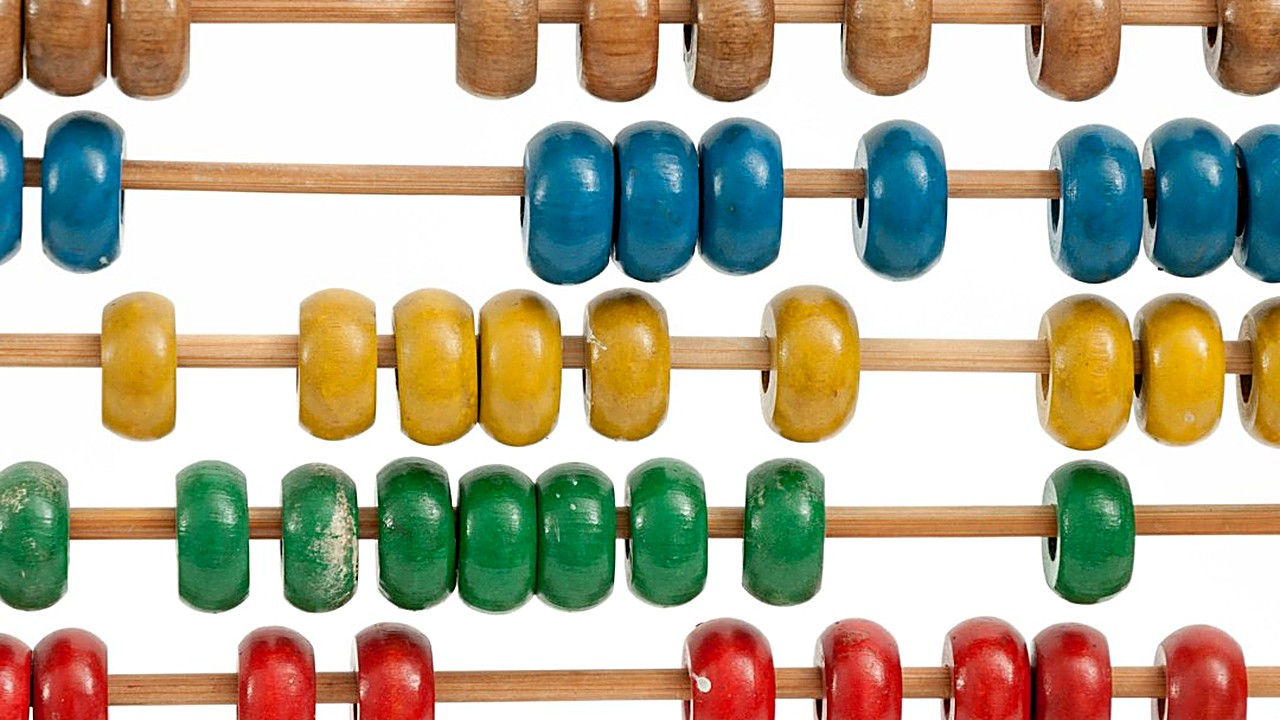
Quick answer: Use fewer for things you can count one by one (fewer cars, fewer emails). Use less for things you cannot count as single pieces (less water, less time). If you can put a number in front of the word, choose fewer.↗ Share on X
Use fewer for things you can count one by one: fewer cars, fewer emails, fewer mistakes. Use less for things you cannot count as separate pieces: less water, less noise, less stress. The fastest test is this: if you can put a number in front of the noun ("three cars", "two emails"), use fewer. If a number sounds strange ("three waters"? "two noises"?), use less.
That is the whole rule. The rest of this article shows you how to use it fast, while you are talking, so you stop pausing in the middle of a sentence.
What is the 5-second counting test?
 In, On, or At? Using Prepositions of Place in Real Talk →
 In, On or At? Time Prepositions Made Simple With 1 Picture →
 Stative Verbs: Why "I Am Knowing" Sounds Wrong in English →
When you are not sure, do this in your head:
1. Find the noun after the word. In "I have ___ time", the noun is *time*.
2. Try to put the number "three" in front of it. "Three times"? That changes the meaning. "Three time"? Wrong.
3. If "three + noun" sounds normal, say fewer.
4. If it sounds strange, say less.
Let's try it:
- "There were ___ people at the party." → "three people" sounds normal → fewer people.
- "I drink ___ coffee now." → "three coffee" sounds strange → less coffee.
- "We got ___ complaints this month." → "three complaints" is normal → fewer complaints.
- "She has ___ patience than her brother." → "three patience" is strange → less patience.
A small clue helps too: countable nouns usually have a plural form with -s (cars, books, calls). If the noun ends in -s because it is plural, fewer is almost always right.
Level up — free guides in your inbox
Which words go with less and which go with fewer?
Here is a table with words you use every day. Read it out loud once. Your ear learns faster than your eyes.
| Use FEWER (you can count them) | Use LESS (you cannot count them one by one) |
|---|---|
| fewer hours of sleep | less sleep |
| fewer dollars | less money |
| fewer cups of coffee | less coffee |
| fewer cars on the road | less traffic |
| fewer meetings | less work |
| fewer friends | less free time |
| fewer calories | less food |
| fewer problems | less trouble |
| fewer words | less information |
| fewer chairs | less furniture |
| fewer bags | less luggage |
| fewer songs | less music |
Look at the pairs. "Money" is one big amount, so it takes less. "Dollars" are units you count, so they take fewer. The thing in the real world is the same. The word you choose changes the rule.
This is why learners get confused. In some languages, "information", "furniture" or "advice" can be counted. In English, they cannot. You say "less information", never "fewer informations".
Why do native speakers sometimes say "less" with countable things?
 Collocations at Work: Word Pairs That Make English Natural →
 Who, Which, That: Relative Pronouns for Everyday English →
 Master Adjectives & Adverbs in Professional Email Writing →
You will hear people say "less people" or "less cars" on TV, in songs and in shops. It happens a lot in fast, casual speech. So is it wrong?
The honest answer: it is common, but it is not the careful form. Teachers, exam graders, editors and many employers notice it. If you want to sound clear and educated, use fewer with countable nouns. You lose nothing by doing it right.
There are also real exceptions where less is correct even with numbers. Native speakers use these without thinking, and they are not mistakes.
What are the 5 exceptions where "less" is correct with a number?
The idea behind all of them is the same: we see the number as one amount, not as separate pieces.
1. Money. "It costs less than 20 dollars." You are talking about a price, one amount.
2. Time. "The trip took less than three hours." Hours here are a length of time, not a stack of separate hours.
3. Distance. "We live less than 2 miles from the school."
4. Weight and size. "The box weighs less than 5 pounds." "The room is less than 100 square feet."
5. Age. "Children less than 12 years old enter for free." (You can also say "under 12".)
A quick way to remember: if you could replace the phrase with "a smaller amount of", use less.
- "Less than 20 dollars" = a smaller amount of money. ✔
- "Fewer than 20 dollars" sounds like you are counting bills on a table. Possible, but unusual.
There is one more fixed phrase: "one less". People say "one less thing to worry about" and "one less car on the road". This is normal, natural English. Do not change it to "one fewer" in conversation. It sounds odd.
How do I fix this mistake when I am speaking fast?
Knowing the rule is easy. Using it while you talk is harder. Here is a 7-day plan that takes about 10 minutes a day.
Day 1 – Read the table out loud. Say each pair two times. "Fewer meetings, less work. Fewer meetings, less work."
Day 2 – Make your own list. Write 10 things from your life you can count (emails, kids, bills, shifts) and 10 you cannot (rain, homework, electricity, noise).
Day 3 – Make "fewer" sentences. Write five true sentences: "I want fewer late nights." "Our team had fewer sick days this year."
Day 4 – Make "less" sentences. Five more: "I spend less money on food now." "This job gives me less stress."
Day 5 – Practice the exceptions. Use money, time and distance: "My commute is less than 30 minutes." "I paid less than 50 dollars."
Day 6 – Correct real examples. Listen to a podcast or video and catch one "less" or "fewer". Ask yourself: was it a countable noun? Was it money or time?
Day 7 – Use it in a real conversation. Plan one sentence before a call or meeting. "We need fewer steps in this process." Say it. Done.
After one week, the right word starts to come out on its own. That is the goal: no thinking, no pause.
What about "more", "a lot of" and "a few"?
Good news: some words work with both types of nouns, so you can use them when you are unsure.
| Works with countable AND uncountable | Example (countable) | Example (uncountable) |
|---|---|---|
| more | more cars | more traffic |
| a lot of | a lot of emails | a lot of work |
| some | some friends | some help |
| no | no problems | no time |
Other words follow the same split as fewer and less:
| Countable only | Uncountable only |
|---|---|
| many | much |
| a few | a little |
| a number of | an amount of |
| fewer | less |
So the opposites line up. "Many" goes with "fewer". "Much" goes with "less". If you already know "many cars" and "much traffic", you already know "fewer cars" and "less traffic". It is the same pattern.
Tip for fast talk: if you freeze, switch to "not as many" or "not as much". "There were not as many people as last year." That sentence is always correct, and nobody will notice you avoided the choice.
Can you check my sentences? Common mistakes and fixes
Here are sentences learners say often. The fix is on the right.
| Mistake | Correct version | Why |
|---|---|---|
| I have less friends here. | I have fewer friends here. | You can count friends. |
| There is fewer traffic today. | There is less traffic today. | Traffic is one mass. |
| We need less mistakes. | We need fewer mistakes. | Mistakes can be counted. |
| Less than ten people came. | Fewer than ten people came. | People are separate units. |
| I want fewer stress. | I want less stress. | Stress is not counted. |
| It took fewer than an hour. | It took less than an hour. | Time is one amount. |
| She gave me fewer advice. | She gave me less advice. | "Advice" is uncountable in English. |
Notice the last one. Words like advice, information, news, furniture, equipment, homework and luggage are traps. They feel countable, but in English they always take less, much and a little. If you want to count them, add a unit: "two pieces of advice", "fewer pieces of luggage".
Does this matter in exams and job interviews?
Yes. In tests like IELTS, TOEFL and many school exams, "less" with a plural countable noun is marked as a grammar error. In writing, graders see it clearly.
In a job interview, the mistake will not cost you the job by itself. But small errors add up. Saying "we had fewer delays after I changed the schedule" sounds precise and confident. That is the impression you want.
In emails and reports, use the strict rule every time. Writing gives you time to check, so there is no excuse.
Your next step
Today, pick three things you can count and three you cannot from your own day. Say one sentence for each, out loud, before you go to bed. For example:
- "I answered fewer emails today."
- "I drank less water than I should."
- "I had fewer meetings this week."
Tomorrow, catch yourself once in a real conversation. When you hear "less" before a plural word, ask the counting question: "Can I put a number in front of it?" If yes, say fewer. Repeat this for one week, and the mistake will be gone.
FAQ
Is it wrong to say 'less people'?
In careful English, yes. People can be counted, so the standard choice is 'fewer people'. You will hear 'less people' in casual speech, but in a job interview, an exam or a work email, say 'fewer people'.
Why do we say 'less than 10 dollars' and not 'fewer than 10 dollars'?
Because we think of the money as one amount, not as ten separate bills. The same goes for time, distance and weight: 'less than 5 miles', 'less than two hours', 'less than 3 pounds'.
What about '10 items or less' at the supermarket?
Strict grammar says '10 items or fewer', and some stores use that wording. But '10 items or less' is so common that nobody will misunderstand you. In formal writing, use 'or fewer'.